

Qoobo - Brown
HOW TO PLAY Stroke Qoobo and its tail responds to you.You can feel the heart-warming emotional interaction.We developed...
Robotic therapy pets are robotic animals and tactile aids that offer reassurance, companionship and joy to older people and those who cannot have a living pet. They are interactive, easy to care for and combine technology with research-based benefits in welfare technology.
Wera Welltech offers robotic cats, dogs and birds from Joy For All, tactile aids such as Qoobo and Petit Qoobo from Yukai Engineering, and Amagami Ham Ham in four versions. Many individuals buy for themselves or family members, while municipalities buy for care homes, supported housing under Sweden’s LSS disability support system, schools and libraries.

Compare products for homes and organisations. Choose a category to find your way around the range.
HOW TO PLAY Stroke Qoobo and its tail responds to you.You can feel the heart-warming emotional interaction.We developed...

HOW TO PLAY Stroke Qoobo and its tail responds to you.You can feel the heart-warming emotional interaction.We developed...

SPECIFICATIONS AMAGAMI HAM HAM Power supply Uses 3 AA alkaline batteries (batteries sold separately) Compatible batteries Alkaline batteries,...

SPECIFICATIONS AMAGAMI HAM HAM Power supply Uses 3 AA alkaline batteries (batteries sold separately) Compatible batteries Alkaline batteries,...

SPECIFICATIONS AMAGAMI HAM HAM Power supply Uses 3 AA alkaline batteries (batteries sold separately) Compatible batteries Alkaline batteries,...

More information about Fufuly SPECIFICATIONS fufuly Power supply Rechargeable battery (lithium-ion polymer) Charging time Approx. 5 hours Battery...

SPECIFICATIONS AMAGAMI HAM HAM Power supply Uses 3 AA alkaline batteries (batteries sold separately) Compatible batteries Alkaline batteries,...

Jessica Svensson has several years of experience working with social service dogs and also works with robotic therapy...

Ingrid, 90, lost her husband and lives alone. She now has three robotic cats and describes how much the robotic cat "little Hjärtat" has meant to her.

Gun in Katthammarsvik went viral when her daughter shared a video of her cuddling her robotic dog: "This works really well... Many people with dementia experience a lot of confusion, and perhaps it does not matter so much what is real; you live in the here and now."
More than half a million Joy For All robotic therapy pets have been sold worldwide. The cat model launched in 2016 and the dog model the following year. Robotic birds arrived in 2022 and can, among other things, remind people to take their rollator along. According to Joy For All, the products have a 4.7 rating on Amazon.com from over 1,000 reviews, independent clinical and academic research, and a National Science Foundation Grant Award.
Research compiled by Wera Welltech indicates that robotic therapy pets can reduce feelings of depression, isolation and loneliness, reduce behavioural difficulties associated with dementia, offer a calming experience without medication, improve cognitive activity and reduce the care burden on staff and family members.
In Region Gotland's project 3S (Stimulate, Spur and Spread), where Wera Welltech founder Fredrik Westergaard was project manager, every dementia ward received a robot dog and a robot cat in 2019. The project won an innovation award. One example: at Pjäsen's nursing home, staff described how Gun slept much better and had less anxiety with her robot dog Roffe.


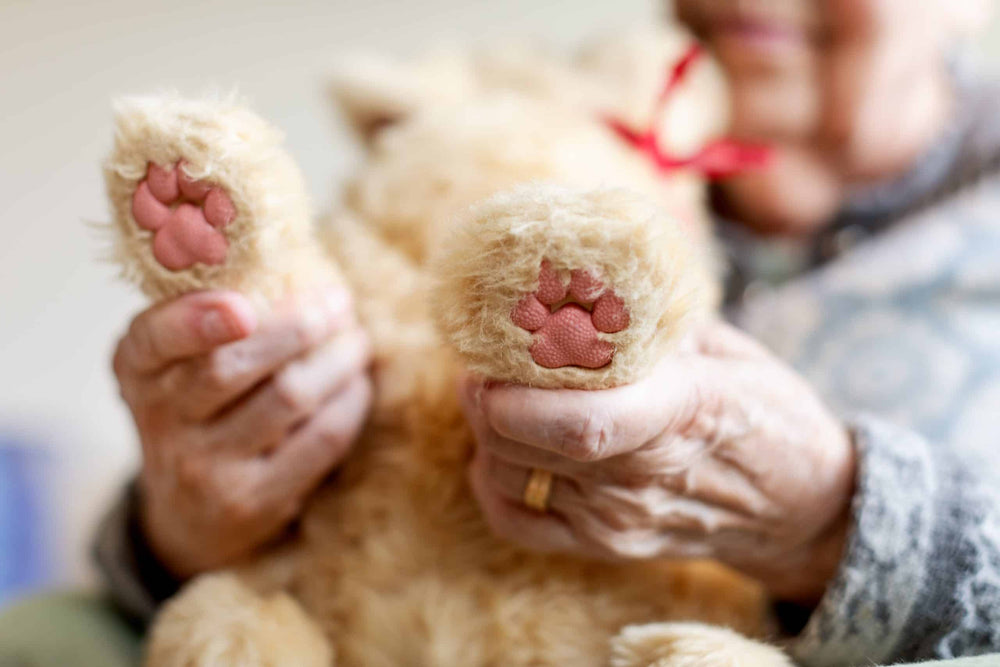


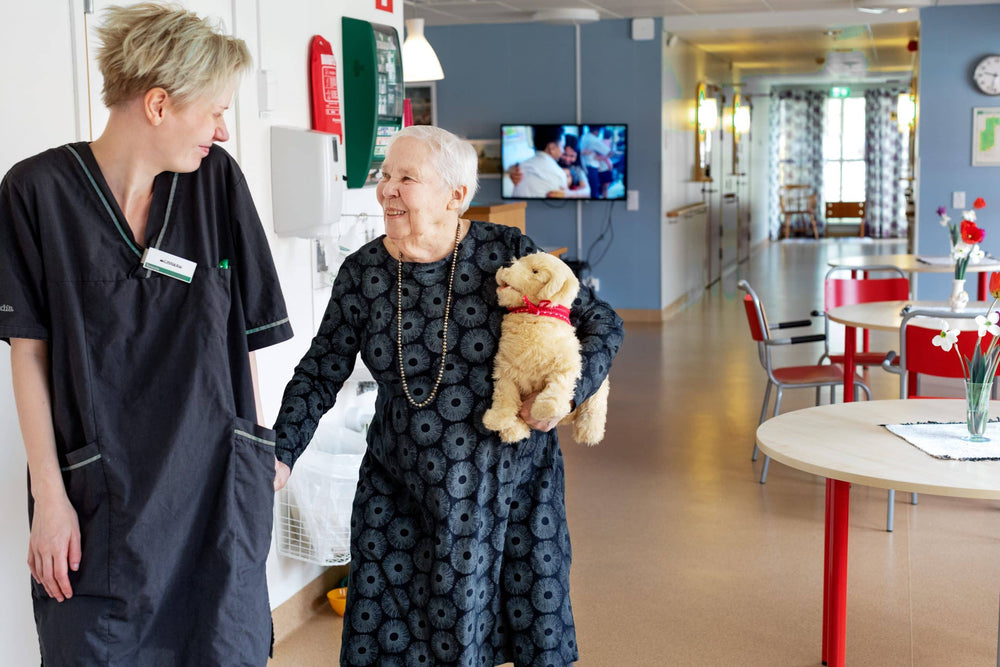
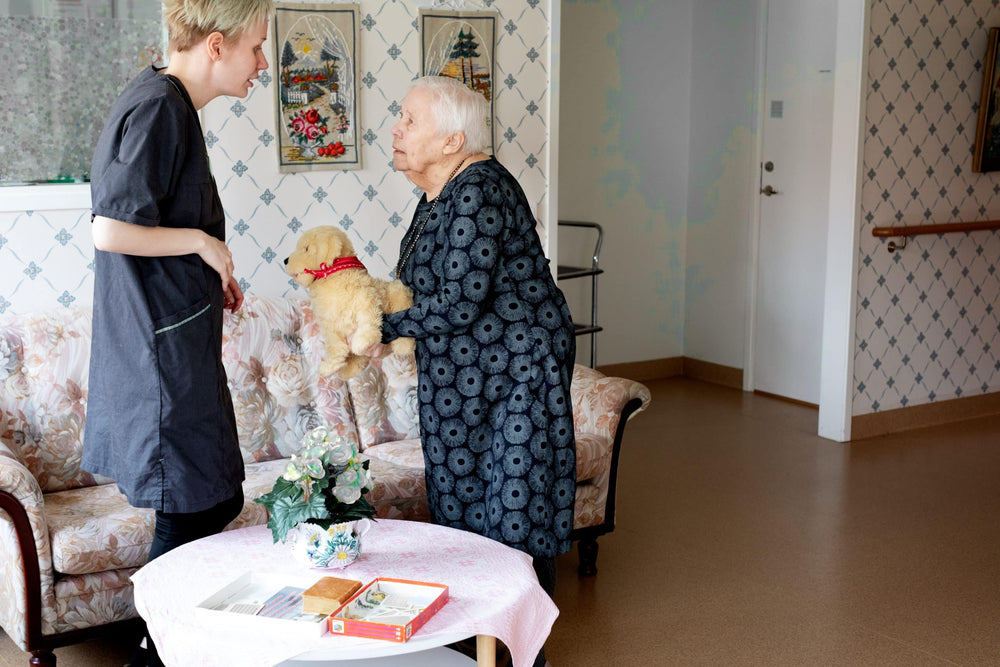


Photos from Katthammarsvik care home. Photo: Anna Björkegren.

We recommend a broad rollout where the organization acquires dogs, cats and birds alike, so each individual can choose the animal that suits them best – studies show that older adults often prefer dogs over cats. Wera Welltech offers staff training together with Hand Hund & Hälsa, for a sustainable, person-centered approach.


The robot animals can be washed by hand, not in a machine – just like real animals. Wera Welltech has developed cleaning instructions and a cleaning kit that ensures no contamination spreads if the instructions are followed.
Battery life depends on how often the animal is used and whether it is switched off between uses. With continuous use, the batteries may run out after a few days. With occasional use and the animal switched off in between, they can last for months.
Metakatt has a rechargeable battery and is charged using the included USB-C cable. Follow the instructions for your specific model for charging and operating times.
Robotic pets should be cleaned by hand, not in a washing machine. Correct cleaning is important for safe handling and to avoid damaging the electronics.
Read the cleaning instructions here.
Ideally, each person should have their own pet. If animals are shared, we recommend that each person washes and disinfects their hands before and after use.
Yes! If you do not touch your cat, dog or bird for a few minutes, it will fall asleep. To wake it up, simply give it a gentle stroke or pick it up.
Yes. Under a Velcro flap on the belly of both the robotic cats and dogs, there is a switch with ON, MUTE and OFF settings.
The birds are switched off by pressing and holding the tail feather.
They are lifelike, interactive pets created to offer companionship, joy and enjoyment. Robotic cats, dogs and birds respond to things such as touch and can move and make sounds.
They require little maintenance and can be an alternative for people who cannot have a living animal. The choice of animal and how it is used need to be adapted to the person.
The fur on Joy For All animals is made from polyester and acrylic, and the materials are synthetic.
Materials may differ between models. Contact us if you need material details for a specific Metakatt or another animal in the range.
We are sometimes asked which robotic dog or interactive robotic pet performs best in tests. We follow the market and work with the animals that best suit our customers.
Start with the person who will use the animal: some prefer dogs, others cats or birds. A person-centred choice matters more than expecting one animal to suit everyone.
Robotic pets (cats, dogs and birds) imitate a whole pet with movement and sound. Tactile aids such as Qoobo, Petit Qoobo, Amagami Ham Ham and Fufuly focus on touch, for example a wagging tail or a breathing cushion.
Yes, research indicates reduced distress, fewer behavioural difficulties and improved quality of life for people with dementia, but use should be person-centred. Therapy pets do not suit everyone, just as not everyone likes living animals.
Yes, through Wera Welltech’s quotation form with e-invoicing.